


Business moves fast these days. New tools show up every quarter, customer expectations shift, and the skills that got your team through last year may already feel a little dated. That is exactly why workforce training has stopped being a “nice to have” and turned into something companies genuinely lean on to stay competitive.
When employees keep learning, organizations keep adapting. Continuous development helps people handle new responsibilities, adopt new technology, and contribute ideas that push the business forward. Workforce training solutions make this possible by giving companies a structured, repeatable way to build skills, boost productivity, and improve overall performance.
In this guide, we will walk through what workforce training solutions actually are, why they matter, the different types available, and how to choose one that fits your organization. We will also look at how AI is reshaping training and share a few practical tips you can use right away.
What Are Workforce Training Solutions?
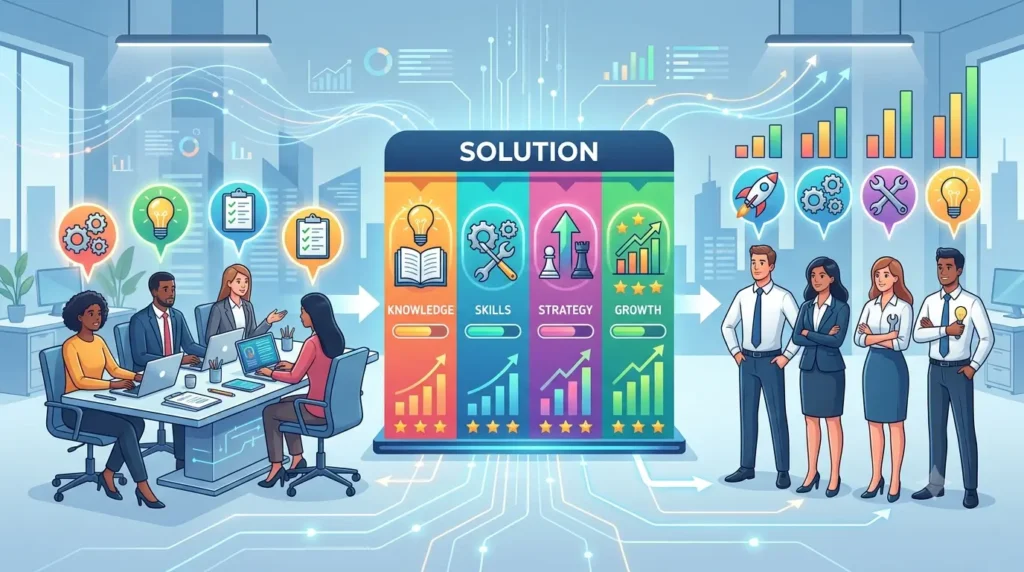
Workforce training solutions are structured programs, tools, and platforms that help employees build the knowledge and skills needed to do their jobs well. They usually combine content, technology, and tracking so companies can deliver consistent learning at scale.
Why Businesses Need Workforce Training
Skills expire faster than most people expect. Without ongoing training, employees fall behind on tools, processes, and industry standards, and that gap eventually shows up in performance and customer experience.
Workforce Training vs Traditional Employee Training
Traditional training often meant a one time onboarding session or an annual workshop. Workforce training takes a broader view, treating learning as something ongoing that touches every stage of the employee journey, not just the first week on the job.
Why Workforce Training Matters for Business Growth
Close Employee Skill Gaps
Training helps identify where employees are struggling and gives them a clear path to catch up, so teams are not left guessing what they need to learn next.
Improve Employee Productivity
Employees who understand their tools and processes simply get more done in less time. Fewer errors and fewer questions mean smoother workflows across the board.
Increase Employee Engagement
People tend to feel more invested in their work when they can see a company is investing in them too. Learning opportunities are one of the simplest ways to show that.
Improve Employee Retention
According to LinkedIn’s Workplace Learning Report, a large majority of organizations name learning and career development as their top retention strategy, and it is easy to see why. Employees who feel stuck are far more likely to look elsewhere.
Support Business Innovation
A well trained workforce is more comfortable experimenting with new ideas, tools, and processes, which naturally fuels innovation from the ground up.
Types of Workforce Training Solutions
Not every training program looks the same, and that is a good thing. Here are some of the most common types businesses invest in:
- Employee Onboarding Training: Helps new hires get up to speed on company culture, tools, and expectations from day one.
- Compliance Training: Covers legal, safety, and regulatory requirements employees need to follow.
- Technical Skills Training: Builds proficiency in software, systems, or job specific technical tasks.
- Leadership Development: Prepares employees for management and strategic decision making roles.
- Sales Training: Sharpens techniques for prospecting, negotiating, and closing deals.
- Customer Service Training: Improves communication, empathy, and problem solving during customer interactions.
- Soft Skills Training: Focuses on communication, teamwork, time management, and emotional intelligence.
Benefits of Workforce Training Solutions
Faster Employee Onboarding
Structured onboarding gets new hires productive sooner instead of leaving them to figure things out on their own.
Higher Productivity
Trained employees waste less time searching for answers and spend more time actually doing their jobs.
Better Employee Performance
Ongoing coaching and skill building lead to noticeably stronger individual and team results.
Reduced Training Costs
Centralized platforms cut down on travel, printed materials, and repeated instructor led sessions.
Consistent Learning Across Teams
Everyone gets the same quality of training, regardless of location, shift, or department.
Better Compliance Management
Automated tracking makes it easier to prove certifications and regulatory training are actually up to date.
Increased Business Growth
When people perform better and stay longer, the business grows on a steadier, more predictable foundation.
Essential Features of an Effective Workforce Training Solution
Learning Management System (LMS)
An LMS is the backbone of most workforce training programs, giving companies one place to host, assign, and track courses.
Personalized Learning Paths
Employees learn faster when the content matches their role, skill level, and goals instead of a generic, one size fits all course list.
AI Powered Learning
Smart recommendations help employees find the right course at the right time, without needing a manager to point them there.
Read more: AI in Learning and Development
Mobile Learning
Training that works on a phone or tablet fits naturally into busy schedules, especially for frontline and remote teams.
Assessments and Certifications
Quizzes and certifications confirm that learning actually stuck, not just that a video was played to the end.
Progress Tracking and Reporting
Dashboards give HR and managers visibility into who has completed training and who might need a nudge.
Integrations with HR Systems
Connecting training data with HR platforms keeps records accurate and cuts down on manual data entry.
How Workforce Training Solutions Drive Business Growth
Improve Operational Efficiency
Standardized training reduces errors and rework, which keeps operations running smoothly.
Increase Employee Performance
Clear learning goals give employees something concrete to work toward, and performance tends to follow.
Build Future Ready Teams
Regular upskilling keeps teams prepared for new tools, technology, and market shifts instead of scrambling to catch up later.
Reduce Employee Turnover
Employees who see a real growth path are simply less likely to start job hunting.
Support Organizational Growth
A capable, well trained workforce can take on new projects and markets without the business needing to hire from scratch every time.
Workforce Training Solutions Across Industries
Workforce training looks a little different depending on the industry, but the goal stays the same: prepared employees who can do their jobs confidently.
Healthcare: Focuses on patient safety, clinical procedures, and regulatory compliance.
Manufacturing: Covers equipment handling, safety protocols, and quality control.
Retail: Emphasizes customer service, product knowledge, and point of sale systems.
IT and Technology: Prioritizes technical certifications and continuous upskilling as tools evolve.
Financial Services: Centers on regulatory compliance, risk management, and client communication.
Hospitality: Builds guest service skills alongside operational and safety training.
How to Choose the Right Workforce Training Solution
Identify Training Goals
Start by defining what success actually looks like, whether that is faster onboarding, fewer compliance issues, or stronger sales numbers.
Understand Workforce Needs
Different teams learn differently, so it helps to understand who you are training before picking a platform.
Evaluate Platform Features
Look closely at content libraries, customization options, and how easy the platform is for employees to actually use.
Check Scalability
A good solution should grow with the company, supporting more employees and content without becoming clunky.
Consider AI and Automation
AI driven features like personalized recommendations and automated learning paths can save L&D teams a significant amount of manual work.
Review Reporting and Analytics
Strong reporting tools make it much easier to prove ROI and spot where training programs need adjusting.
Best Practices for Successful Workforce Training
A great platform only goes so far without the right approach behind it. Keep these practices in mind:
- Set clear learning objectives before building or assigning any course.
- Create personalized learning paths based on role and skill level.
- Encourage continuous learning rather than one off training events.
- Use interactive content like scenarios, quizzes, and videos to keep learners engaged.
- Measure training effectiveness with real performance data, not just completion rates.
- Update training content regularly so it reflects current tools and processes.
Common Workforce Training Challenges and How to Overcome Them
Low Employee Engagement
Bite sized, interactive content tends to hold attention far better than long, text heavy modules.
Limited Training Time
Microlearning lets employees complete short lessons between tasks instead of blocking out an entire afternoon.
Budget Constraints
Cloud based LMS platforms are often far more affordable than in person workshops once travel and materials are factored in.
Resistance to Change
Involving employees early and clearly explaining the benefits of training usually softens pushback.
Difficulty Measuring Results
Built in analytics tie training directly to performance metrics, making the impact much easier to see and report.
Communities like humanresources on Reddit are also worth a look if you want to see how other HR and L&D professionals are working through these exact challenges in real time.
How AI Is Transforming Workforce Training
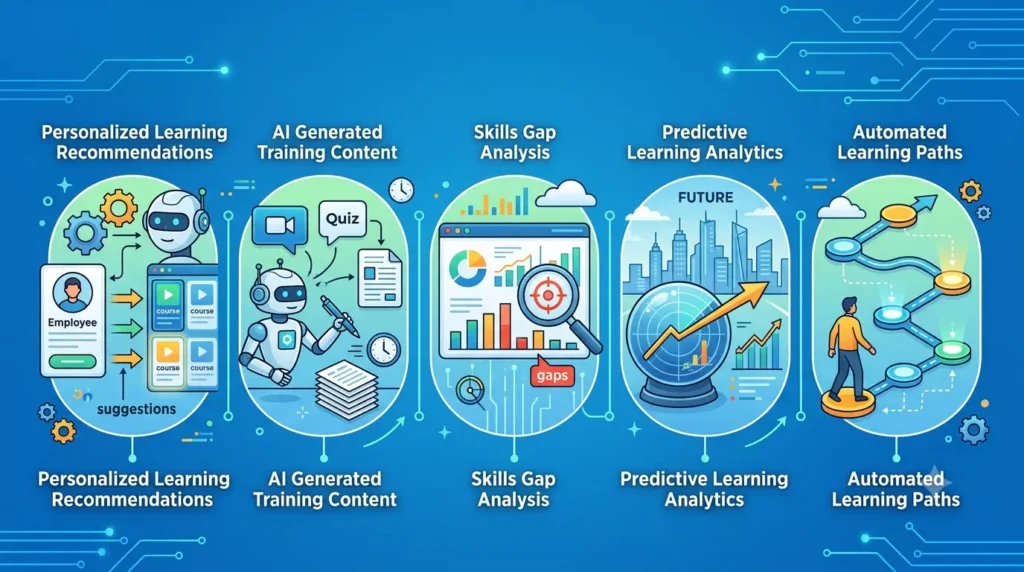
Personalized Learning Recommendations
AI can suggest the next course based on an employee’s role, past activity, and skill gaps.
AI Generated Training Content
Content creation that used to take weeks can now be drafted in a fraction of the time, freeing up L&D teams for higher value work.
Skills Gap Analysis
AI tools can scan performance data to flag exactly where teams are falling short, well before it becomes a bigger problem.
Predictive Learning Analytics
Predictive models help HR teams anticipate future skill needs instead of reacting after the fact.
Automated Learning Paths
Learning paths can adjust automatically as an employee progresses, removing the need for constant manual updates.
Why Businesses Are Investing in Workforce Training Solutions
The connection between common business challenges and the right training approach is pretty straightforward once you lay it out:
| Business Challenge | Workforce Training Solution | Business Benefit |
| Skill Gaps | Personalized Training | Improved Productivity |
| High Turnover | Career Development | Better Retention |
| Compliance Issues | Compliance Training | Reduced Risk |
| Slow Onboarding | Structured Learning Paths | Faster Productivity |
| Remote Teams | Online Training | Consistent Learning |
This is really an extension of ideas rooted in training and development as a discipline, and even older concepts like on the job training, just delivered through modern, scalable technology.
Frequently Asked Questions
What are workforce training solutions?
They are programs and platforms that help employees build skills and knowledge needed to perform their jobs effectively, usually delivered through an LMS or similar system.
Why are workforce training solutions important?
They close skill gaps, boost productivity, and support long term business growth by keeping employees prepared for changing demands.
How do workforce training solutions improve business growth?
They improve efficiency, reduce turnover, and help teams adapt more quickly to new tools, processes, and market conditions.
What types of workforce training are most effective?
It depends on the goal, but a mix of onboarding, technical, compliance, and soft skills training tends to cover the most ground.
How does an LMS support workforce training?
It centralizes content, tracks progress, and makes it easy to assign and manage training across an entire organization.
What features should a workforce training platform have?
Look for personalized learning paths, mobile access, assessments, strong reporting, and HR system integrations.
Can small businesses benefit from workforce training solutions?
Absolutely. Even small teams see real gains in productivity, consistency, and retention once training becomes part of the routine.
How do you measure workforce training success?
Track completion rates alongside actual performance metrics, like productivity, error rates, and retention, rather than completion alone.
Conclusion
Workforce training is not just about checking a box or meeting a compliance requirement. Done well, it shapes how employees grow, how teams perform, and ultimately how far a business can go.
Investing in the right workforce training solution helps organizations close skill gaps, keep employees engaged, stay compliant, and hold onto their best people for longer. Those pieces, put together, are what steady long term growth actually looks like.
If your organization is ready to bring all of this together, SkillForce LMS offers a single platform for scalable workforce training, employee onboarding, compliance training, and continuous learning, so your team always has what it needs to keep growing.