


A team finishes a training course. Everyone gets a certificate. The completion dashboard shows one hundred percent. So the training worked, right? Not necessarily.
Completion is easy to track and easy to celebrate, but it tells you almost nothing about whether people actually learned anything or changed how they work. A lot of companies pour money into corporate training every year and then never circle back to ask whether it actually paid off.
That is the gap this guide is here to close. Below you will find the key metrics, evaluation methods, and practical steps that help you measure whether your workplace training is genuinely working, not just technically finished.
What Is Training Effectiveness?
Training Effectiveness vs Training Completion
Training completion answers a simple question: did the employee finish the course? Training effectiveness asks something much harder: did the employee learn something useful, remember it, and apply it on the job?
You can have a ninety five percent completion rate and still have a training program that changes nothing about how people actually perform. Completion is an activity metric. Effectiveness is an outcome metric, and outcomes are what your business actually cares about.
Why Measuring Training Effectiveness Matters
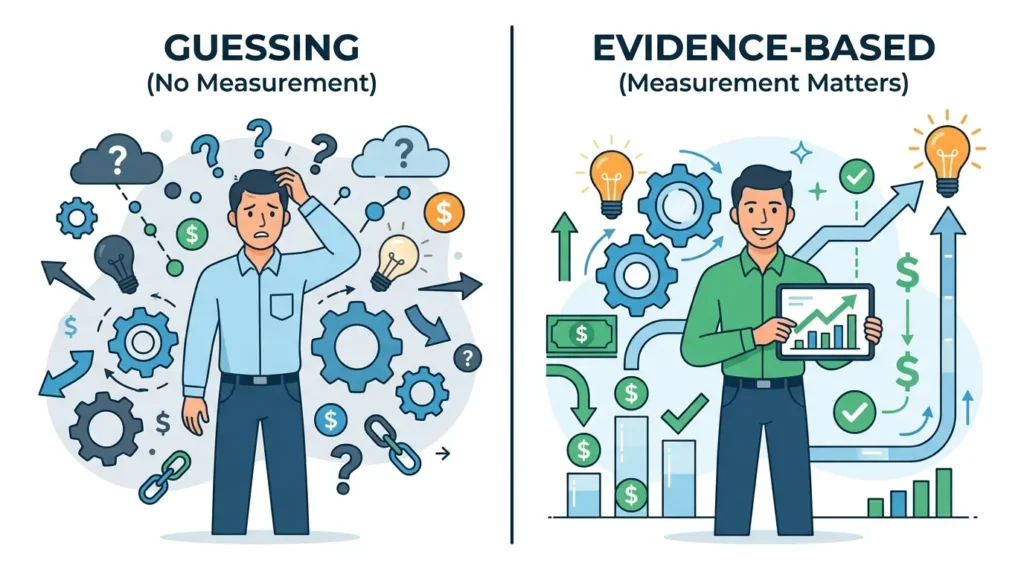
If you never measure effectiveness, you are essentially guessing. You might keep funding a course that employees tolerate but never use, while a genuinely useful session gets cut because nobody could prove its value.
Measuring effectiveness gives you evidence instead of assumptions. It tells you where the training budget is working, where it is not, and what to fix next.
What Makes Employee Training Effective?
Effective training tends to share a few traits. It is tied to a real, specific skill gap. It gives people a chance to practice, not just watch or read. It gets reinforced after the session ends, and its impact shows up in actual day to day performance rather than just a quiz score.
Why Businesses Should Measure Training Effectiveness
Identify Skill Gaps
Measurement shows you exactly where knowledge is missing, so you can design future training around real gaps instead of guesses.
Improve Employee Performance
When you track outcomes, you can see whether training is actually translating into better work, faster problem solving, or fewer errors.
Increase Employee Engagement
Employees engage more with training that clearly connects to their goals and their day to day tasks, and measurement helps you spot what is landing and what is falling flat.
Improve Training Programs
Every round of measurement is a feedback loop. It tells your learning team what content, format, or delivery method to adjust for next time.
Measure Training ROI
Leadership wants to know if the training budget is worth it. Measurement gives you the numbers to make that case.
Support Business Goals
Training should not exist in a vacuum. Measuring effectiveness helps you connect learning directly to goals like retention, productivity, or customer satisfaction.
Key Metrics for Measuring Training Effectiveness
Before diving into methods, it helps to know what you are actually looking for. Here is a simple breakdown of the metrics most companies track.
| Metric | What it measures |
| Course completion rate | Training participation |
| Assessment scores | Knowledge gained |
| Employee engagement | Learner participation |
| Knowledge retention | Information retained over time |
| Skill improvement | Changes in employee capabilities |
| Employee performance | Changes in workplace performance |
| Training ROI | Business value generated |
| Employee feedback | Learner experience |
How to Measure Training Effectiveness
1. Set Clear Training Objectives
You cannot measure success without first defining what success looks like. Write specific, measurable objectives before the training even begins, such as reducing customer complaint resolution time or improving accuracy on a specific task.
2. Measure Employee Knowledge Before Training
A quick baseline assessment before training starts gives you a starting point. Without it, you have no way to know how much someone actually improved.
3. Measure Learning After Training
A post training assessment, quiz, or practical demonstration shows you what employees actually absorbed, not just what they sat through.
4. Track Course Completion and Engagement
Completion still matters as a baseline metric. Pair it with engagement data such as time spent, participation in discussions, and how often employees revisit materials.
5. Evaluate Knowledge Retention
Test employees again a few weeks or months later. Retention checks reveal whether the training actually stuck or simply faded once the course ended.
6. Monitor Changes in Employee Performance
Look at real work output such as sales numbers, error rates, or customer satisfaction scores before and after training to see if behavior genuinely changed.
7. Collect Employee and Manager Feedback
Surveys and one on one conversations reveal whether the training felt relevant and useful, and managers often notice behavioral changes that dashboards miss.
8. Calculate Training ROI
Finally, tie everything back to cost. Compare what the training cost against the measurable value it created, whether that is time saved, revenue gained, or errors avoided.
The Kirkpatrick Model for Training Evaluation
One of the most widely referenced frameworks for training evaluation is the Kirkpatrick Model, developed by Dr. Donald Kirkpatrick in the 1950s and still taught in HR and L&D programs today.
Level 1: Reaction
Did employees find the training useful and engaging? This is usually captured through a short post session survey.
Level 2: Learning
Did employees gain knowledge or skills? This is measured through tests, assessments, or practical demonstrations.
Level 3: Behavior
Are employees applying what they learned? This shows up in actual workplace behavior, often observed by managers over the following weeks.
Level 4: Results
Did the training contribute to business outcomes? This is the hardest level to measure, but also the most valuable, since it ties learning directly to performance, retention, or revenue.
You can read more about the background of this framework on Donald Kirkpatrick. L&D professionals also swap real world takes on how they apply the model in communities.
How an LMS Helps Measure Training Effectiveness
A good learning management system takes most of the manual tracking off your plate. Here is what it typically handles for you.
- Course completion tracking, so you always know who finished what and when
- Assessment and quiz results, captured automatically and scored in real time
- Employee progress reports, broken down by team, role, or individual
- Learning analytics that surface trends across your entire workforce
- Certification tracking, especially useful for compliance heavy industries
- Employee feedback collection, built directly into the course flow
- Training dashboards that give managers and HR leaders a single view of what is working
This is exactly where a platform like SkillForce LMS earns its keep. Instead of stitching together spreadsheets, surveys, and separate quiz tools, everything from completion to ROI calculation lives in one dashboard, so measuring effectiveness stops being a quarterly scramble and becomes something you can check any day of the week.
How to Measure Training ROI
Identify Training Costs
Add up everything that went into the program, including trainer time, materials, software, and the hours employees spent away from their regular work.
Measure Business Outcomes
Identify the specific outcomes the training was meant to influence, such as productivity, sales, quality, or retention.
Compare Results Before and After Training
Look at the same metrics before and after the program to isolate the actual impact of the training itself.
Calculate Training ROI
Once you have both numbers, the formula is simple:
Training ROI = (Training Benefits minus Training Costs) divided by Training Costs, multiplied by 100
If a training program cost ten thousand dollars and generated fifteen thousand dollars in measurable value, the ROI works out to fifty percent.
For a deeper walkthrough of this process, L&D practitioners have shared their own step by step approaches on LinkedIn, including this step by step guide to measuring training effectiveness and this piece on making employee training measurement actually count.
Common Mistakes When Measuring Training Effectiveness
Only Measuring Course Completion
Completion tells you people showed up, not that they learned anything useful.
Ignoring Employee Feedback
Employees often know exactly why a training program is not landing. Skipping feedback means missing that insight entirely.
Not Measuring Knowledge Retention
A skill that fades within a month was never really transferred in the first place.
Focusing Only on Short Term Results
Some training benefits, like improved leadership or communication, only show up months later. Measuring too early can make good training look like it failed.
Not Connecting Training With Business Goals
Training that is not tied to a business objective is nearly impossible to justify with data, no matter how well designed it is.
Best Practices for Improving Training Effectiveness
Use Role Based Learning
Tailor training content to what each role actually needs day to day, rather than sending everyone through identical material.
Set Measurable Objectives
Every training program should start with a goal you can actually track.
Use Assessments
Quizzes and practical tests give you hard evidence of what employees actually learned.
Provide Continuous Training
One off sessions rarely stick. Regular, bite sized training reinforces skills over time.
Track Progress Regularly
Check in on metrics throughout the year instead of waiting for an annual review.
Update Training Content
Retire outdated material and refresh content based on what your data tells you employees actually need.
Use Training Data to Improve Programs
Treat every round of measurement as an input for the next version of the program, not just a report to file away.
Training Effectiveness Measurement Checklist
- Define training objectives
- Measure knowledge before training
- Track course completion
- Measure assessment results
- Collect employee feedback
- Monitor knowledge retention
- Track workplace performance
- Measure business outcomes
- Calculate training ROI
- Improve the training program based on results
Frequently Asked Questions
How do you measure training effectiveness in the workplace?
You combine several signals, including pre and post training assessments, completion and engagement data, on the job performance changes, employee feedback, and training ROI, to build a full picture rather than relying on a single number.
What are the 4 levels of training effectiveness?
The Kirkpatrick Model breaks evaluation into four levels: Reaction, Learning, Behavior, and Results, moving from how people felt about the training all the way to its impact on the business.
What are the best metrics for measuring training effectiveness?
Assessment scores, knowledge retention, employee performance change, and training ROI tend to give the clearest picture, though completion rate and feedback are useful supporting metrics.
How do you measure employee training success?
Success is best measured by comparing employee performance and skill application before and after training, alongside retention checks a few weeks or months later.
How do you measure training ROI?
Add up total training costs, measure the business value generated, and apply the formula: (Training Benefits minus Training Costs) divided by Training Costs, multiplied by 100.
How does an LMS measure training effectiveness?
A learning management system automatically tracks completion, assessment scores, engagement, certification status, and feedback, and rolls it all into dashboards that make patterns easy to spot.
What is the difference between training effectiveness and training completion?
Completion simply shows that someone finished a course. Effectiveness shows whether they actually learned something and are using it in their work.
Conclusion
Course completion certificates feel good, but they are not the finish line. The real question is always whether employees walked away with knowledge, skills, and behavior changes that actually show up in their work.
That means looking beyond completion rates to knowledge gained, skills applied, changes in performance, and the business results that follow. Training ROI ties all of it together into a number leadership can act on.
This is a lot to track by hand, which is exactly why so many companies lean on an LMS. Automated tracking, built in assessments, real time analytics, and reporting dashboards turn training measurement from a once a year headache into an ongoing, always available view of what is working.