


Every business owner has asked the same question at some point. Why do some teams get more done in less time while others struggle to keep up? The answer usually comes down to one thing: training.
When employees understand their tools, their roles, and their goals, they simply work better. They make fewer mistakes, they solve problems faster, and they feel more confident about the work they hand in. Training is not just a checkbox for HR. It is one of the most reliable ways to boost workforce productivity.
The catch is that not all training works the same way. Employees who sit through generic courses that have nothing to do with their daily tasks rarely change how they work. What actually moves the needle is training that is practical, relevant, and tied to real business goals, not just course completion numbers.
Think about the last time you learned a new skill at work. Chances are, once it clicked, tasks that used to take an hour started taking twenty minutes. Multiply that across an entire team, and the impact on output becomes hard to ignore.
Leadership teams often look at productivity dips and assume the problem is motivation or workload. In reality, a large part of the gap usually comes down to skills. Employees want to do good work. When they are not equipped to do it efficiently, frustration builds on both sides, and output slows down as a result.
In this guide, we will walk through how training improves productivity, ten practical ways to make it happen, the types of training worth investing in, and how a learning management system like SkillForce LMS can support the entire process.
How Does Employee Training Improve Workforce Productivity?
Before jumping into tactics, it helps to understand why training works in the first place. Here are the core reasons.
Builds Job Specific Skills
Employees perform better when they have the exact skills their role demands. Generic knowledge only goes so far. Targeted training closes the gap between what an employee knows and what their job actually requires.
Reduces Errors and Rework
A well trained employee is less likely to make costly mistakes. Fewer errors mean less time spent fixing problems, which directly translates into more output from the same number of work hours.
Improves Employee Confidence

People who understand their tasks tend to work with more confidence. That confidence shows up as faster decision making and less second guessing, both of which speed up day to day work.
Helps Employees Adapt to Change
Businesses change constantly, whether it is new software, new processes, or new market demands. Trained employees adapt faster because they already have a habit of learning and applying new information.
Supports Better Decision Making
Training gives employees the context they need to make smart calls without waiting for a manager to step in. That alone can save hours across a team every single week.
10 Ways to Increase Workforce Productivity Through Training
1. Identify Employee Skill Gaps
Start by understanding where employees need improvement. Assess current skills and identify areas that may be affecting productivity or job performance. This helps businesses create training programs that address actual workforce needs instead of providing unnecessary courses.
2. Create Role-Based Training Programs
Employees in different roles need different skills. Create training based on each employee’s responsibilities, experience, and goals. Role-based training keeps learning relevant and helps employees focus on the knowledge they need to perform their jobs effectively.
3. Improve Employee Onboarding
A structured onboarding program can help new employees become productive faster. Provide clear learning paths that introduce employees to their role, tools, processes, and company policies. Well-planned onboarding also gives new employees a clear understanding of what is expected from them.
4. Use Continuous Employee Training
Employee training should not stop after onboarding. Provide regular opportunities for employees to develop new skills and improve existing ones. Continuous training helps employees keep up with changes in their roles, technologies, and business processes.
5. Use Microlearning for Quick Skill Development
Long training sessions can be difficult to fit into a busy workday. Microlearning breaks larger topics into short, focused lessons that employees can complete in less time. This makes it easier to learn specific skills without taking employees away from their regular responsibilities for long periods.
6. Improve Employee Engagement Through Training
Employees are more likely to benefit from training when the content is relevant and engaging. Use interactive activities, practical examples, quizzes, and real workplace situations. Connecting training directly to employees’ daily responsibilities can also make learning more useful and easier to apply.
7. Train Employees on New Tools and Technologies
New software and technologies can improve productivity, but employees need to know how to use them properly. Provide training whenever new tools or systems are introduced. This helps employees adapt faster and reduces the time they may otherwise spend figuring out new technology on their own.
8. Develop Managers and Team Leaders
Managers have a direct impact on team performance, so leadership training should be part of a workforce development strategy. Focus on areas such as:
- Leadership skills
- Communication
- Decision-making
- Team management
- Conflict resolution
Better-trained managers can support their teams more effectively and help employees perform at their best.
9. Track Training Progress and Performance
Tracking training progress helps businesses understand whether employees are completing their assigned learning. Monitor course completion, assessment results, and learning progress. These insights can also help identify employees who may need additional training or support.
10. Measure Training Effectiveness
Training should be measured by more than course completion. Compare employee performance before and after training, monitor changes in productivity, and collect feedback from employees and managers. These results can show whether training is actually improving workplace performance and where the program needs to be improved.
Types of Training That Can Improve Workforce Productivity
Different roles need different kinds of training. Here are the categories that tend to have the biggest impact on productivity.
Technical Skills Training
Covers the hard skills employees need to do their specific job well, from software proficiency to industry specific processes.
Soft Skills Training
Focuses on communication, collaboration, time management, and problem solving. These skills affect nearly every task an employee handles.
Leadership Training
Prepares managers and future leaders to guide teams effectively, which has a ripple effect on the productivity of everyone they manage.
Employee Onboarding Training
Sets the tone for a new hire’s entire time at the company and speeds up the path to full productivity.
Compliance Training
Keeps employees aligned with legal and company policies, reducing risk and preventing costly disruptions.
Digital Skills Training
Helps employees keep pace with evolving technology, tools, and platforms used across the business.
Customer Service Training
Improves how employees interact with clients and customers, which affects satisfaction, retention, and ultimately revenue.
How an LMS Can Support Workforce Productivity
Running all of this manually across a growing team gets complicated fast. Spreadsheets fall out of date, training materials end up scattered across shared drives, and it becomes nearly impossible to know who has actually completed what. This is where a learning management system becomes genuinely useful, and it is where a platform like SkillForce LMS fits in.
Centralized Employee Training
All courses, resources, and materials live in one place instead of being scattered across emails, folders, and spreadsheets.
Personalized Learning Paths
Employees get training that matches their role and current skill level, rather than a one size fits all course list.
Automated Training Assignments
New hires and role changes automatically trigger the right training, saving HR teams a significant amount of manual work.
Progress Tracking
Managers can see exactly who has completed what, and who might be falling behind.
Assessments and Certifications
Built in tests and certifications confirm that employees actually absorbed the material, not just clicked through it.
Reporting and Analytics
Detailed reports make it easy to connect training activity with real performance outcomes.
AI Powered Learning
SkillForce LMS uses AI powered features to recommend relevant courses, flag skill gaps early, and help teams stay a step ahead instead of reacting after productivity has already slipped.
How to Measure the Impact of Training on Productivity
Training without measurement is really just a guess. Here are the metrics worth tracking to know whether your training programs are actually working.
| Metric | What It Shows |
|---|---|
| Employee performance | Changes in job performance |
| Productivity | Output or efficiency improvements |
| Error rate | Reduction in mistakes |
| Training completion | Participation |
| Assessment scores | Knowledge gained |
| Time to proficiency | How quickly employees become effective |
| Employee engagement | Participation and interest |
| Training ROI | Business value of training |
According to a widely referenced overview of training and development on Wikipedia, organizations that treat training as an ongoing investment rather than a one time event tend to see more consistent performance gains over time.
Common Training Mistakes That Can Reduce Productivity
Even well intentioned training programs can backfire. Here are the mistakes to watch out for.
Training Employees on Irrelevant Topics
Courses that do not connect to an employee’s actual work waste time and lower motivation to engage with future training.
Too Much Training at Once
Overloading employees with hours of content in a short window leads to poor retention and burnout rather than better performance.
Using the Same Training for Every Role
A single course library for the entire company rarely serves anyone well, since different roles need different skills.
Ignoring Employee Feedback
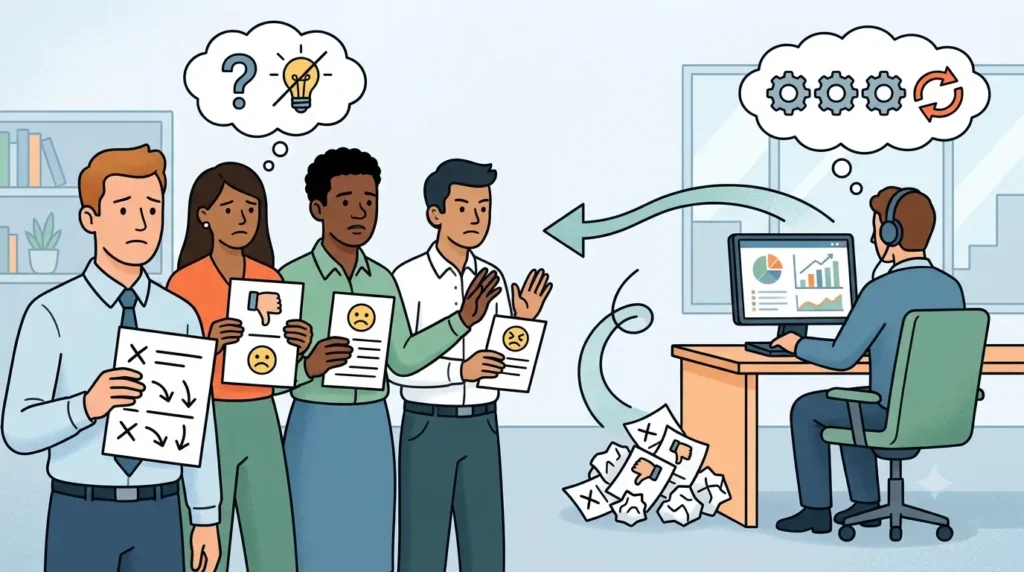
Employees usually know which training helped and which fell flat. Ignoring that feedback means repeating the same mistakes.
Not Measuring Results
Without tracking outcomes, it is impossible to know if training is actually improving productivity or simply checking a box.
Failing to Update Training Content
Outdated material teaches outdated processes, which can actually slow employees down instead of helping them.
Best Practices for Productivity Focused Training
If you want training to genuinely move the needle on productivity, keep these principles in mind.
- Connect training with business goals. Every course should tie back to a measurable outcome the company cares about.
- Keep training practical. Favor real scenarios and hands on exercises over abstract theory.
- Personalize learning. Match content to each employee’s role, experience level, and pace.
- Give employees time to practice. Learning a skill and applying it are two different things, and both need space.
- Track progress regularly. Do not wait until year end reviews to see how training is landing.
- Update training based on results. Treat your course library as a living resource, not a fixed archive.
Many HR and L&D professionals share similar experiences in communities such as the humanresources subreddit, where discussions often circle back to the same idea: training that is tied to clear goals and regularly updated tends to stick, while one off sessions tend to fade quickly.
Frequently Asked Questions
How does training increase workforce productivity?
Training gives employees the skills and confidence to complete tasks accurately and efficiently, which reduces errors, speeds up work, and improves overall output.
What type of training improves employee productivity?
Role based technical training, soft skills development, and leadership training tend to have the most direct impact, since they address the skills employees use every day.
How can businesses measure training’s impact on productivity?
By comparing performance metrics before and after training, tracking assessment scores, and monitoring output or error rates over time.
How can an LMS improve workforce productivity?
An LMS centralizes training, automates assignments, tracks progress, and provides analytics, which makes it much easier to deliver consistent, relevant training at scale.
How does employee onboarding affect productivity?
Strong onboarding helps new hires reach full productivity faster by giving them structured guidance instead of leaving them to figure things out on their own.
How can training reduce workplace errors?
When employees fully understand their tools and processes, they are far less likely to make avoidable mistakes that require rework.
How often should employees receive training?
Most organizations benefit from continuous, ongoing training rather than a single onboarding session, with regular refreshers as roles, tools, and goals evolve.
Conclusion
Workforce productivity rarely improves by accident. It comes from employees who understand their roles, feel confident in their skills, and have the tools to keep learning as things change. Training, when done well, is one of the most direct ways to make that happen.
The programs that work best share a few things in common. They are relevant to the actual job, they are organized around specific roles, they are measured against real outcomes, and they never really stop. A single onboarding session is a start, not a finish line.
Managing all of this at scale is where a learning management system earns its place. SkillForce LMS brings employee training, onboarding, progress tracking, and reporting into a single platform, making it far easier for growing companies to build training programs that actually move productivity forward instead of just checking a compliance box.
For HR leaders and managers, that shift matters. It moves training from a once a year event into an ongoing part of how the business operates, which is exactly the environment where productivity tends to improve and stay improved.
If your team is ready to turn training into a real productivity driver, exploring what a platform like structured, tracked learning can do for your organization is a good next step.