


Corporate training has come a long way from packed classrooms and printed manuals. A decade ago, most companies relied on instructor-led sessions that required everyone to be in the same room at the same time. That model worked fine when teams were small and centralized. It doesn’t hold up well anymore.
Today’s workforce is spread across cities, time zones, and sometimes continents. People expect to learn on their own schedule, at their own pace, using tools that feel as intuitive as the apps they use every day. This shift is exactly why digital learning solutions have moved from a “nice to have” to a core part of how businesses operate.
In this guide, we’ll walk through what digital learning solutions actually are, why companies are investing in them, the different types available, and how to choose one that fits your organization. We’ll also look at practical implementation tips and common pitfalls, so you can build a training strategy that actually sticks.
What Are Digital Learning Solutions?
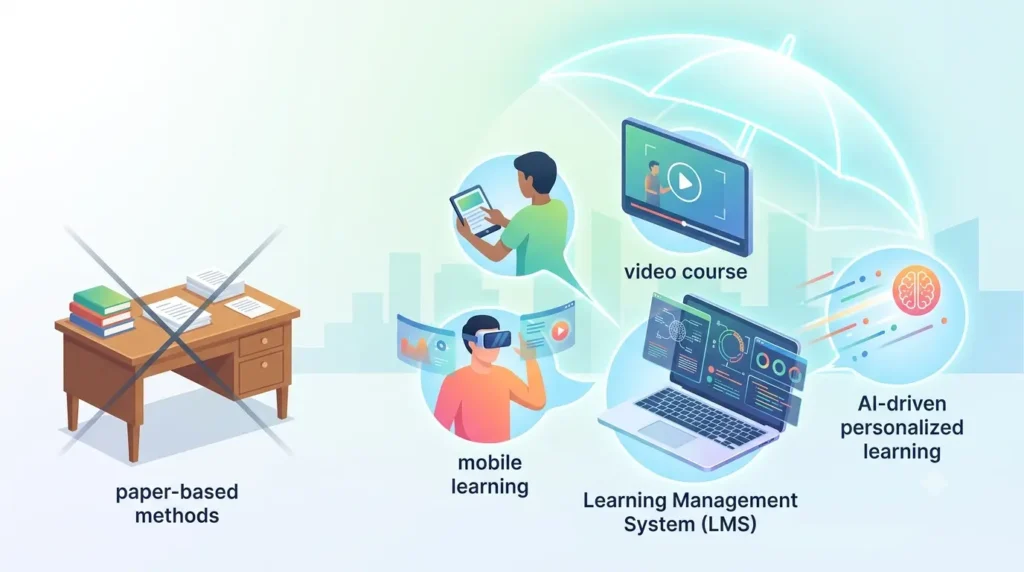
Digital learning solutions refer to the tools, platforms, and content formats organizations use to deliver training and development electronically instead of through in-person, paper-based methods. This includes everything from learning management systems to mobile apps, video courses, and AI-driven learning recommendations.
Think of it as the umbrella term for any technology that helps employees learn a new skill, complete compliance training, or onboard into a role without needing a physical classroom.
How Digital Learning Solutions Work
Most digital learning solutions run on a central platform, usually a learning management system (LMS), where content is uploaded, organized into courses, and assigned to learners. Employees log in, work through material at their own pace, take quizzes or assessments, and their progress gets tracked automatically.
Behind the scenes, the system handles things like reminders, certificates, reporting, and sometimes even personalized content suggestions based on a learner’s role or performance.
Why Corporate Teams Need Digital Learning
Skills go out of date faster than they used to. According to research summarized on Wikipedia’s overview of corporate learning, organizations increasingly build internal learning functions to keep pace with changing business needs rather than relying solely on external training providers. Digital learning gives teams a way to keep up without pulling people out of their jobs for days at a time.
Why Businesses Are Adopting Digital Learning Solutions
Support Remote and Hybrid Workforces
When your team isn’t sitting in one office, training can’t depend on everyone showing up to a room. Digital learning removes that constraint completely. A new hire in Manila and a manager in Chicago can go through the same onboarding course without ever syncing their calendars.
Continuous Employee Development
Learning isn’t a one-time event anymore. Employees who feel like they’re growing tend to stay longer and perform better. Digital platforms make it easy to offer ongoing development instead of a single onboarding week followed by silence.
Faster Knowledge Sharing
When a process changes or a new product launches, digital learning lets you push updated training to everyone at once. No waiting for the next scheduled workshop.
Business Scalability
A company with 50 employees and a company with 5,000 employees can’t train people the same way. Digital learning solutions scale up (or down) without needing more trainers in a physical room.
Changing Workforce Expectations
Younger employees especially expect flexibility. A LinkedIn Learning report has repeatedly found that access to learning opportunities is one of the top reasons employees stay at a company, and one of the top reasons they leave when it’s missing. You can find ongoing workforce learning trends discussed on LinkedIn’s professional insights section.
Types of Digital Learning Solutions
Learning Management Systems (LMS)
An LMS is the backbone of most corporate training programs. It’s the software where courses live, progress gets tracked, and reports get generated.
Virtual Instructor-Led Training (VILT)
This is live training delivered over video conferencing. It keeps the human element of a classroom but removes the need for physical travel.
Self-Paced Online Learning
Employees work through pre-recorded courses whenever it fits their schedule. This is one of the most flexible formats available.
Microlearning
Short, focused lessons, often under ten minutes, that target one specific skill or concept. Great for busy teams who can’t sit through hour-long sessions.
Mobile Learning
Training delivered through smartphones and tablets. This matters a lot for frontline or field employees who don’t sit at a desk all day.
Blended Learning
A mix of digital and in-person methods. Many companies use this to combine the convenience of online modules with the connection of live discussion.
AI-Powered Learning Platforms
These platforms use data about a learner’s role, past performance, and goals to recommend what to learn next. It’s a growing area, and one worth watching closely.
Benefits of Digital Learning Solutions for Corporate Teams
Flexible Learning Anytime, Anywhere
Employees can complete training between meetings, during a commute, or at home in the evening. This flexibility alone drives much higher completion rates than fixed-schedule training.
Improved Employee Engagement
Interactive content, quizzes, and gamified elements keep learners more engaged than a static slide deck ever could.
Faster Employee Onboarding
New hires can start learning before their first day, which shortens the time it takes for them to become productive.
Read more: Employee Onboarding Software: Complete Guide for Businesses
Better Knowledge Retention
Bite-sized lessons and repeated practice help information stick longer than a single long training session.
Increased Productivity
Employees spend less time away from their actual work because training fits around their schedule instead of the other way around.
Reduced Training Costs
No travel, no venue rental, no printed materials. Digital delivery cuts a lot of the overhead tied to traditional training.
Consistent Training Across Teams
Everyone gets the same course content, which means less variation in quality between locations or departments.
Easier Compliance Training
Automated reminders and built-in reporting make it much simpler to prove that required training was actually completed.
Essential Features of an Effective Digital Learning Solution
Course Creation & Management
The ability to build, edit, and organize courses without needing a developer involved.
Personalized Learning Paths
Content tailored to a person’s role, department, or skill gaps, rather than a one-size-fits-all catalog.
Assessments and Certifications
Built-in quizzes, exams, and certificates to verify that learning actually happened.
Progress Tracking & Analytics
Dashboards that show who’s completed what, who’s falling behind, and where the gaps are.
AI-Powered Learning Recommendations
Smart suggestions that point employees toward the next relevant course based on their history.
Collaboration & Social Learning
Discussion boards, peer feedback, and shared projects that make learning feel less isolated.
Mobile Accessibility
A platform that works just as well on a phone as it does on a laptop.
Third-Party Integrations
Connections to HR systems, communication tools, and other software your company already relies on.
How Digital Learning Solutions Improve Corporate Performance
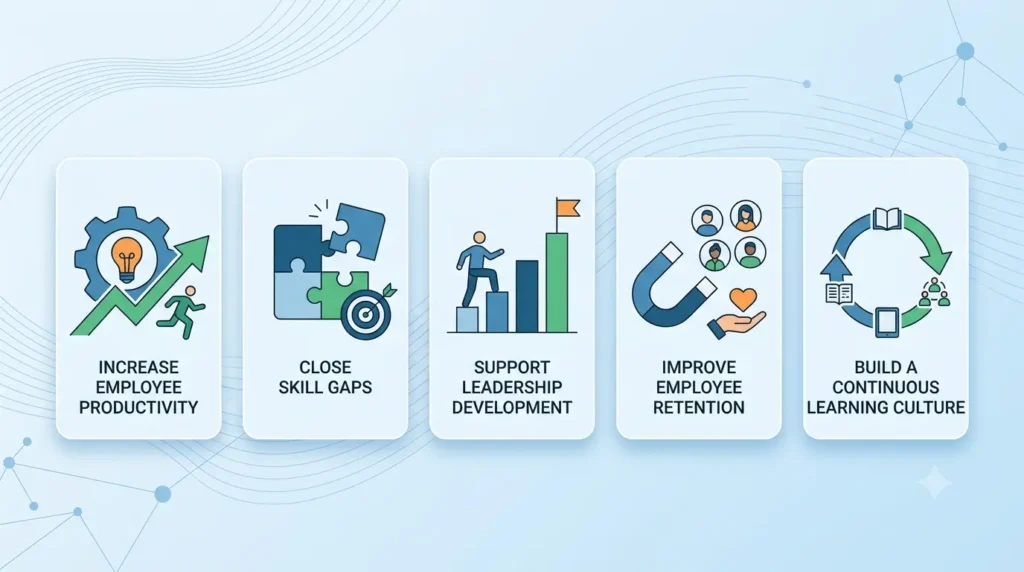
Increase Employee Productivity
Well-trained employees make fewer mistakes and need less hand-holding, which frees up time for managers and teammates alike.
Close Skill Gaps
Targeted training helps address specific weaknesses across a team instead of guessing what people need.
Support Leadership Development
Digital courses on management and communication skills help prepare employees for bigger roles before they’re promoted into them.
Improve Employee Retention
People are more likely to stay somewhere they feel is investing in their growth.
Build a Continuous Learning Culture
When learning becomes a habit instead of a rare event, teams adapt faster to change.
Digital Learning Solutions Across Different Business Functions
HR and Employee Onboarding
HR teams use digital learning to standardize onboarding, so every new hire gets the same foundational training regardless of location.
Sales Enablement
Sales reps use short, on-demand modules to learn about new products or refresh their pitch before a big call.
Customer Service Training
Support teams stay current on policies and product changes through quick, regularly updated lessons.
Compliance and Regulatory Training
Industries like finance and healthcare rely heavily on digital learning to track mandatory training completion and avoid penalties.
Leadership Development
Structured courses help managers build skills in communication, feedback, and team management.
Technical Skills Training
Engineering and IT teams use digital platforms to stay current with new tools, languages, and frameworks.
How to Choose the Right Digital Learning Solution
Define Business Objectives
Start with what you’re actually trying to achieve, whether that’s faster onboarding, better compliance tracking, or upskilling for a new product line.
Assess Workforce Training Needs
Talk to managers and employees directly. The gaps they mention are often different from what leadership assumes.
Evaluate Platform Features
Match the platform’s capabilities against your actual requirements instead of getting distracted by features you’ll never use.
Consider Scalability
Choose a platform that can grow with your headcount, not one you’ll outgrow in a year.
Check Integration Capabilities
Make sure it connects cleanly with your existing HR and communication tools.
Compare Pricing and Support
Look beyond the sticker price. Factor in onboarding support, customer service response times, and any hidden costs.
Best Practices for Implementing Digital Learning Solutions
Set Clear Learning Goals
Define what success looks like before you roll anything out. Vague goals lead to vague results.
Create Engaging Content
Break long topics into shorter modules and use real examples employees can relate to.
Encourage Continuous Learning
Make learning part of the normal work rhythm, not a once-a-year event.
Track Learning Progress
Use built-in analytics to see what’s working and what isn’t, then adjust.
Gather Employee Feedback
Ask learners directly what’s helpful and what feels like a waste of time. This feedback loop matters more than most companies realize, a point echoed frequently in workplace learning discussions on Reddit’s HR community, where practitioners regularly share what actually works on the ground.
Update Learning Content Regularly
Outdated training does more harm than no training at all. Review and refresh content on a set schedule.
Common Challenges and How to Overcome Them
Low Learner Engagement
Fix this by keeping courses short, adding interactive elements, and connecting training directly to real job tasks.
Resistance to New Technology
Involve employees early, offer simple onboarding for the platform itself, and highlight quick wins.
Keeping Content Updated
Assign clear ownership for each course so someone is always responsible for keeping it current.
Measuring Training Effectiveness
Go beyond completion rates. Look at performance changes, error rates, or productivity metrics tied to the training.
Managing Large Teams
Use automation for assignments, reminders, and reporting so the administrative load doesn’t grow with headcount.
The Role of AI in Digital Learning
Personalized Learning Paths
AI can analyze a learner’s role and performance to recommend the next best course, rather than leaving them to search a generic catalog.
AI-Generated Courses
Some platforms now help create draft course content, cutting down the time it takes to build new training.
Skills Gap Analysis
AI tools can compare current employee skills against role requirements and flag where gaps exist.
Intelligent Assessments
Adaptive quizzes adjust difficulty based on how a learner is performing in real time.
Predictive Learning Analytics
AI can flag employees at risk of falling behind before it becomes a bigger performance issue.
Why an LMS Is the Foundation of Digital Learning Solutions
Centralized Learning Management
An LMS keeps every course, learner record, and report in one place instead of scattered across spreadsheets and folders.
Automated Training Workflows
Assignments, reminders, and follow-ups happen automatically, saving significant admin time.
Real-Time Reporting
Managers can check progress instantly instead of waiting for a manual status update.
Compliance Management
Automated tracking makes it far easier to prove regulatory training was completed on time.
Scalable Employee Development
As the company grows, the LMS handles more learners without needing a proportional increase in training staff.
Measuring the Success of Digital Learning Solutions
Course Completion Rates
A basic but useful indicator of whether people are actually finishing what they start.
Employee Engagement Metrics
Look at time spent, participation in discussions, and repeat logins to gauge real interest.
Assessment Scores
Quiz and exam results show whether the material is actually being understood.
Productivity Improvements
Compare performance metrics before and after training to see real-world impact.
Training ROI
Weigh the cost of the platform and content against measurable gains in performance, retention, or reduced errors.
Frequently Asked Questions
1. What are digital learning solutions?
Digital learning solutions are tools and platforms, such as learning management systems, mobile apps, and online courses, that organizations use to deliver employee training electronically instead of through in-person classroom sessions.
2. How do digital learning solutions benefit corporate teams?
They offer flexible, scalable training that improves engagement, speeds up onboarding, reduces costs, and helps close skill gaps across the organization.
3. What is the difference between digital learning and eLearning?
Digital learning is the broader term covering any technology-based training method, including live virtual sessions and mobile learning. eLearning typically refers specifically to self-paced, pre-recorded online courses.
4. What features should a digital learning platform have?
Look for course creation tools, personalized learning paths, assessments, progress tracking, mobile access, and integration with your existing HR systems.
5. How does an LMS support digital learning?
An LMS acts as the central hub for hosting courses, tracking learner progress, generating reports, and automating reminders and certifications.
6. Can small businesses use digital learning solutions?
Yes. Many platforms offer scalable pricing, which makes digital learning accessible for small teams as well as large enterprises.
7. How do you measure the success of digital learning programs?
Track completion rates, assessment scores, engagement metrics, and productivity or performance changes tied directly to the training.
8. What role does AI play in digital learning?
AI helps personalize learning paths, generate course content, identify skill gaps, and predict which employees may need additional support.
Conclusion
Digital learning solutions have become a practical necessity for companies that want to keep their teams skilled, engaged, and ready for what’s next. They give organizations the flexibility to train remote and in-office employees consistently, the scalability to grow without adding training overhead, and the data to actually see what’s working.
Choosing the right platform matters just as much as the decision to go digital in the first place. Look for a solution that fits your business goals, integrates with your existing tools, and can grow alongside your team.
That’s exactly what SkillForce LMS is built for. It brings course creation, personalized learning paths, compliance tracking, and real-time reporting into one platform, so your team can spend less time managing training logistics and more time actually learning. If you’re ready to modernize how your organization trains and develops employees, SkillForce LMS gives you the foundation to do it well.