


Employee engagement in training is one of those topics that sounds straightforward until you actually try to fix it. You invest time building a course, roll it out to your team, and then watch as completion rates hover around 40 percent and quiz scores tell you very little has been retained.
The problem is not that employees do not want to learn. Most people genuinely want to do their jobs well and grow in their careers. The problem is usually that the training itself is not designed in a way that holds their attention, feels relevant to their actual work, or gives them any real reason to stay invested from start to finish.
Online training creates a unique set of engagement challenges. Without a trainer in the room, without social pressure, and without a fixed schedule to keep people accountable, disengagement happens quickly. A video that runs too long, a module that feels generic, or a quiz with no meaningful feedback is enough to lose someone completely.
The good news is that most of these problems are solvable. With the right strategies, the right content approach, and the right platform, you can build online training that employees actually want to complete. This guide walks through exactly how to do that.
What Is Employee Engagement in Online Training?
Employee Engagement Defined
Employee engagement in the context of online training refers to how actively and meaningfully an employee participates in their learning. An engaged learner is not just clicking through slides to reach the completion screen. They are paying attention, thinking about the material, and connecting it to their actual work.
Engagement shows up in behavior. It is whether someone watches a video all the way through, whether they attempt a quiz more than once to improve their score, whether they revisit a module because they found it useful. These signals tell you far more about the quality of your training than completion rates alone.
Why Engagement Matters in Workplace Learning
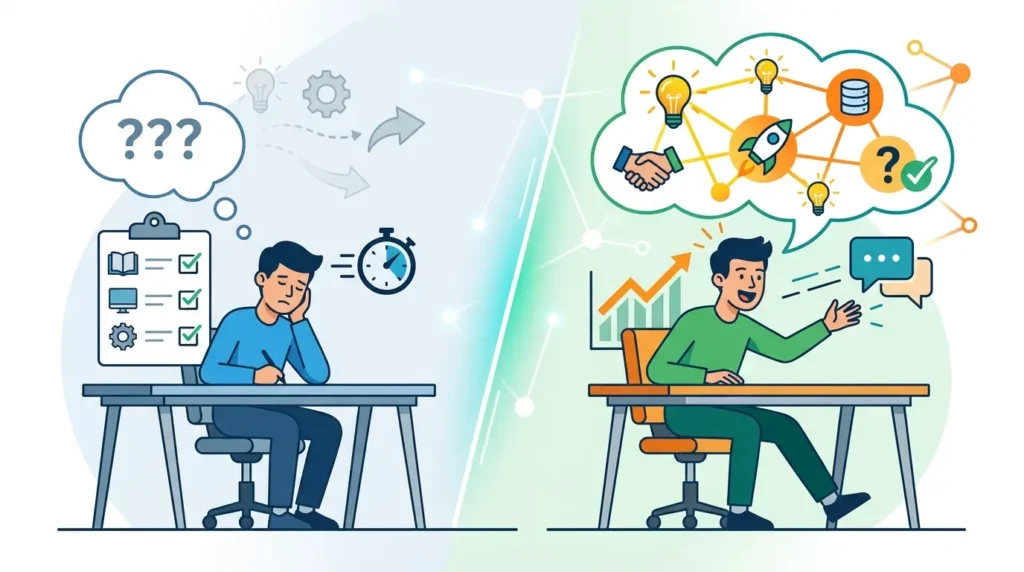
Engagement is what determines whether training produces any real change in knowledge or behavior. A course that is technically completed but never engaged with is essentially wasted. Employees go through the motions, tick the box, and forget everything within a few days.
When employees are genuinely engaged, they retain more, apply more, and perform better. Engaged learners ask questions, seek out additional resources, and carry what they learned into their everyday work. That is the outcome every L&D team and training manager is ultimately trying to achieve.
Signs of Low Engagement During Online Training
If engagement is a problem in your organization, there are clear signs to watch for:
- Low course completion: If a significant number of learners are starting courses but not finishing them, something in the experience is causing them to disengage and walk away.
- Minimal participation: In courses with discussion forums, reflection activities, or collaborative elements, low participation is a strong signal that learners are not invested in the content.
- Poor knowledge retention: If assessment scores are low, or if employees cannot apply what they learned shortly after completing a course, the training has not engaged them deeply enough for the material to stick.
- Lack of motivation: When employees treat training as a chore to get through rather than an opportunity to develop, that attitude almost always reflects a problem with how the training has been designed and delivered.
Benefits of Engaged Employees in Online Training
Getting engagement right is worth the effort. Here is what changes when employees are genuinely invested in their training.
Better Knowledge Retention
Engaged learners retain significantly more than those who passively click through content. When training captures attention, connects to real situations, and asks learners to actively think rather than just read, the information moves from short-term memory into practical knowledge that lasts.
Higher Course Completion Rates
Engagement and completion are closely linked. When a course is genuinely interesting and clearly relevant, learners finish it. When it is dull, confusing, or feels irrelevant to their role, they abandon it. Improving engagement is one of the most direct levers available for improving completion rates.
Improved Employee Performance
Training that is completed and retained translates into better job performance. Employees who finish a well-designed course come away with skills and knowledge they can apply immediately. Over time, this improvement compounds across teams and departments.
Increased Productivity
When training is effective, employees need less time repeating it, less time seeking help with tasks covered in training, and less time recovering from mistakes that good training would have prevented. Engaged, well-trained employees simply get more done.
Stronger Learning Culture
When employees consistently have positive experiences with online training, something bigger happens over time. Learning stops feeling like a compliance obligation and starts feeling like a normal, welcome part of working life. That shift in culture has long-term benefits that go far beyond any individual course.
Common Challenges That Reduce Employee Engagement
Before you can solve engagement problems, it helps to understand where they typically come from.
Long and Boring Training Sessions
Attention spans are limited. A training module that runs for 45 minutes without variety, interaction, or natural break points will lose most learners somewhere in the middle. Long sessions also make it harder for busy employees to find time to complete training in one sitting, which increases the likelihood they will abandon it and never return.
Lack of Interactive Content
Training that is purely passive, watch a video, read some text, click next, gives learners no reason to think or participate. Without interaction, it is easy to let the content wash over you without absorbing any of it. The brain learns better when it is actively involved, and passive content does not create that kind of involvement.
Generic Learning Experiences
When training content feels like it was written for everyone in general and no one in particular, employees disengage. If a retail employee is being asked to complete a course filled with examples from the healthcare industry, or a senior manager is working through content clearly designed for entry-level staff, they lose confidence that the training is relevant to them and stop engaging.
Limited Feedback and Communication
Learning in isolation is discouraging. When employees complete an assessment and get a simple pass or fail without any explanation, or when they complete a course and hear nothing from a manager or trainer, the experience feels transactional and meaningless. Feedback is what connects effort to growth, and without it, motivation fades.
No Motivation or Recognition
People are more motivated when their effort is acknowledged. If completing a training course leads to nothing, no recognition, no certificate, no visible progress, no career benefit, many employees will quietly deprioritize it. Recognition does not have to be elaborate. Even a simple badge or a completion notification shared with a manager makes a difference.
Strategies to Improve Employee Engagement Through Online Training
Here are the most effective approaches for building training that employees actually engage with.
Set Clear Learning Goals
Before a learner starts a course, they should know exactly what they will gain from it. Tell them upfront what the course covers, how long it takes, and how it connects to their role or career development. When learners understand the purpose of training before they begin, they approach it with more intention and stay engaged throughout.
Create Short and Focused Learning Modules
Break long courses into short modules focused on a single concept or skill. Modules of five to ten minutes are far easier to complete and retain than hour-long sessions covering ten different topics. Short modules also let employees fit training into their working day in smaller increments, which removes one of the most common barriers to completion.
Personalize the Learning Experience
Generic training delivered the same way to everyone is one of the fastest ways to lose engagement. When employees feel like a course was designed with their role, their skill level, and their actual challenges in mind, they pay attention. Personalization does not have to be complex. Even simple things like addressing learners by role or using examples drawn from their department can make a significant difference.
Use Interactive Content
Interactive content gives learners something to do rather than just something to watch. Effective interactive elements include:
- Videos: Short, focused video lessons with clear narration and on-screen visuals. Keep them under eight minutes and use them to explain concepts that benefit from demonstration.
- Quizzes: Knowledge checks placed throughout the course, not just at the end. They reinforce learning, provide immediate feedback, and keep learners actively thinking about the material.
- Polls: Quick opinion or knowledge polls that invite learners to share their perspective. They add variety and make the learning experience feel more like a conversation.
- Simulations: Realistic simulations of workplace tasks or decisions allow learners to practice in a safe environment before applying skills in the real world.
- Scenario-based learning: Presenting learners with real-world situations and asking them to make decisions based on what they have learned. This is particularly effective for customer service, compliance, and leadership training.
Encourage Active Participation
Give learners ways to contribute rather than just consume. Reflection prompts, discussion questions, case study analyses, and peer review activities all require learners to actively engage with the material rather than passively absorb it. Active participation deepens understanding and makes the experience more memorable.
Provide Continuous Feedback
Feedback should happen throughout the learning experience, not just at the end. When a learner gets a quiz question wrong, tell them why and point them back to the relevant content. When they complete a module, acknowledge the progress. When they finish the course, give them a clear sense of what they have achieved and what comes next.
Use Gamification to Increase Engagement
Gamification applies game-like mechanics to the learning experience to make it more motivating and enjoyable. Used well, it can significantly increase both engagement and completion rates.
Badges
Badges are visual rewards that learners earn when they complete a course, achieve a high score, or reach a milestone. They give learners a tangible token of their progress and create a sense of achievement that motivates continued learning. Many employees find that collecting badges becomes its own form of motivation over time.
Points and Rewards
Awarding points for completed activities, high assessment scores, or consistent learning habits gives employees a running score of their engagement. Points can be purely symbolic or tied to real rewards like gift vouchers or recognition in a company-wide communication. Either way, they add a layer of motivation that purely passive training lacks.
Leaderboards
Leaderboards rank learners based on their points, completion rates, or assessment scores. They introduce a healthy element of competition and are particularly effective in sales teams and departments where a competitive culture already exists. For teams where competition feels less appropriate, optional leaderboards give learners the choice to participate or opt out.
Certificates
Certificates serve two purposes. They acknowledge the learner’s effort and provide a shareable credential that has professional value. When employees can add a certificate to their professional profile or include it in a performance review, completing training carries a tangible benefit that goes beyond the learning itself.
Learning Challenges
Time-limited learning challenges, such as completing a set of courses within a month or finishing a training series before a team event, create a sense of urgency and shared purpose. Challenges work especially well when teams participate together, turning individual training into a collective goal.
Make Learning Flexible and Accessible
One of the biggest barriers to engagement is simply not having the time or opportunity to train. Flexibility removes that barrier.
Mobile Learning
Employees should be able to access training from their phone or tablet just as easily as from a desktop computer. Mobile learning opens up time that would otherwise be lost, commutes, breaks, quiet moments between tasks. For frontline and field-based workers, mobile access is not a nice-to-have but a necessity.
Self-Paced Courses
When employees can move through a course at their own speed, they are more likely to engage with the content properly rather than racing through it. Self-paced learning respects different learning styles and schedules, and removes the pressure of keeping up with a group or meeting a fixed session time.
Microlearning
Microlearning delivers content in short, focused bursts of two to ten minutes. Each lesson covers a single concept and can be completed independently. This format is ideal for busy employees who struggle to block out large amounts of time for training. It also leads to better knowledge retention because information is easier to process in small doses.
On-Demand Learning
On-demand learning means that training is available whenever an employee needs it, not just during a scheduled window. When someone needs to refresh their knowledge before a specific task or wants to learn something new outside of a structured program, on-demand access makes that possible. This positions the LMS as a resource rather than just a compliance tool.
Leverage an LMS to Improve Employee Engagement
The right Learning Management System does much more than deliver courses. It creates the conditions for engagement through features designed to keep learners motivated, supported, and progressing.
Personalized Learning Paths
An LMS can assign different learning paths to different employees based on their role, department, or skill level. Instead of everyone receiving the same generic training catalog, each learner gets a structured journey that is relevant to their actual development needs. Personalized paths keep training focused and prevent the disengagement that comes from irrelevant content.
Progress Tracking
When learners can see their own progress, they are more motivated to continue. A clear progress bar, a checklist of completed modules, or a visual summary of achievements gives employees a sense of forward momentum that encourages them to keep going rather than abandon a course halfway through.
Automated Reminders
Life gets busy and training gets forgotten. Automated reminders sent through email or in-app notifications keep training on employees’ radar without requiring managers to chase anyone manually. Reminders can be triggered by deadlines, inactivity, or approaching certification expiry dates, ensuring that nothing falls through the cracks.
Social Learning Features
Learning alongside others increases engagement. Discussion forums, comment sections on lessons, and peer feedback tools create a sense of community around training. When employees can share insights, ask questions, and respond to their colleagues’ observations, the learning experience becomes richer and more connected to real working life.
Reporting and Analytics
Data is what allows training managers to identify engagement problems before they become completion problems. Real-time dashboards that show completion rates, time spent on content, assessment scores, and drop-off points give L&D teams the visibility they need to intervene early and improve training programs continuously.
AI-Powered Learning Recommendations
Modern LMS platforms use AI to analyze each learner’s activity and recommend the next most relevant course or resource. Instead of leaving employees to browse a course catalog and figure out what to do next, the system surfaces content that is tailored to their progress and development goals. This keeps the learning experience feeling guided and purposeful rather than random.
Measure Employee Engagement in Online Training
You cannot improve what you cannot measure. Here is how to track engagement effectively.
Course Completion Rates
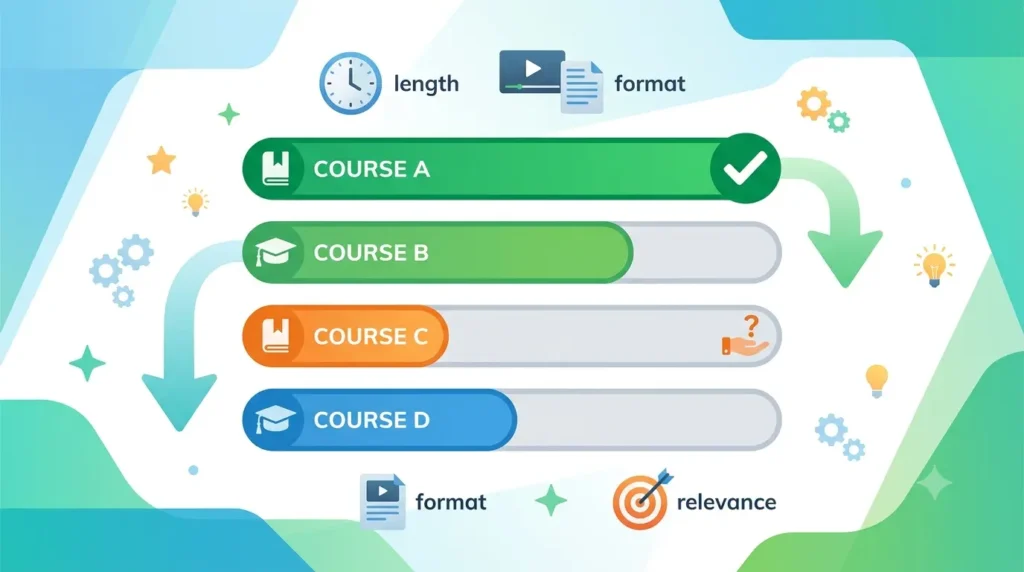
Completion rate is the most basic engagement metric and a useful starting point. If completion rates are consistently low across certain courses, that is a clear signal that something in those courses is not working, whether it is the content, the length, the format, or the relevance to the audience.
Assessment Scores
Assessment results tell you more than whether someone finished a course. They tell you whether the learning actually happened. Low average scores suggest the content is unclear or the assessments are poorly aligned with what was taught. High scores after multiple retakes may indicate that learners are guessing rather than learning.
Learner Feedback
Direct feedback from employees is one of the most valuable engagement signals available. A short survey at the end of a course asking learners what they found useful, what was confusing, and what they would change gives you qualitative insight that metrics alone cannot provide.
Participation Metrics
For courses with interactive elements, participation metrics show how actively learners are engaging. Are they contributing to discussions? Are they attempting optional activities? Are they rewatching videos or revisiting modules? These behaviors reveal depth of engagement beyond simple completion.
Training ROI
Ultimately, the measure of whether training is engaging enough is whether it produces any change in performance. Connecting training completion data to performance metrics, sales results, customer satisfaction scores, or error rates gives you a direct view of the return your training investment is generating.
Common Mistakes to Avoid
Even well-intentioned training programs make these mistakes. Knowing about them in advance makes them much easier to avoid.
One-Size-Fits-All Training
Delivering the same training to every employee regardless of their role, experience level, or learning needs almost always produces low engagement. The content will feel too basic for some, too advanced for others, and irrelevant to many. Segmenting your training by role and tailoring the content accordingly is one of the highest-impact improvements you can make.
Information Overload
Trying to cover too much in a single course overwhelms learners and reduces retention. When a module covers ten different concepts in thirty minutes, learners remember very little of it. Focus each lesson on one clear idea and let understanding build gradually across a series of shorter, connected modules.
Ignoring Employee Feedback
Collecting feedback through end-of-course surveys is only useful if you act on it. When employees see that their feedback changes nothing about how training is designed or delivered, they stop providing honest responses. Showing learners that their input has a direct impact on the training program builds trust and encourages more meaningful participation.
Lack of Follow-Up
Training that ends at the completion screen misses a significant opportunity. Following up with learners after they finish a course, through a brief check-in, a reflection activity, or a manager conversation, reinforces the learning and connects it to real work situations. Without follow-up, even well-designed training fades quickly.
Focusing Only on Completion Instead of Learning
Completion rates are easy to measure, so they often become the primary success metric for training programs. But a high completion rate does not automatically mean learning occurred. Measure understanding, behavior change, and performance impact alongside completion to get a genuine picture of whether your training is working.
Best Practices for Long-Term Employee Engagement
Sustaining engagement over time requires more than a single well-designed course. Here are the practices that keep learning alive across an organization.
- Update training content regularly: Content that becomes outdated loses relevance quickly. Schedule regular reviews of all your training material and update it whenever processes, tools, products, or regulations change.
- Recognize employee achievements: Acknowledge when employees complete training programs, earn certifications, or reach learning milestones. Public recognition, whether in a team meeting, a company newsletter, or an internal communication platform, reinforces that learning is valued.
- Encourage peer learning: Create opportunities for employees to learn from each other through mentoring programs, knowledge-sharing sessions, and collaborative learning activities. Peer learning adds depth to formal training and builds connections across teams.
- Align training with career development: When employees can see a direct connection between completing training and advancing in their career, their motivation to engage increases significantly. Build learning paths that lead toward promotions, new responsibilities, or professional qualifications.
- Make learning continuous: Engagement drops when training is treated as an annual event rather than a regular part of working life. Build a culture where short, regular learning activities are the norm, not the exception.
How AI Is Transforming Employee Engagement in Online Training
Artificial intelligence is changing what is possible in workplace learning. The impact on engagement is significant and growing.
Personalized Learning Recommendations
AI analyzes each employee’s learning history, role, and performance to recommend the most relevant content for them at any given moment. Instead of presenting a generic course catalog, the platform surfaces specific courses and resources that match what that individual actually needs to develop. This kind of relevance is one of the most powerful drivers of engagement.
AI-Generated Learning Paths
Beyond individual recommendations, AI can generate complete learning paths tailored to a specific role, skill gap, or development goal. These paths adapt over time as the learner progresses, adjusting to their pace and performance rather than following a fixed sequence regardless of how well they are doing.
Intelligent Assessments
AI-powered assessments adjust the difficulty and type of questions based on how a learner is performing. A learner who is struggling receives more foundational questions and additional support. A learner who is excelling moves on to more challenging material. This adaptive approach keeps assessments appropriately challenging and ensures they serve as a genuine measure of understanding rather than a hurdle to clear.
Predictive Learning Analytics
AI analytics can identify patterns that predict disengagement before it leads to dropout. If a learner’s activity drops off, their scores start declining, or their time on platform decreases, the system flags it. Training managers can then reach out proactively rather than discovering the problem after the fact.
SkillForce LMS brings all of these capabilities together in a platform built specifically for business training. With AI-powered course recommendations, personalized learning paths, gamification features, mobile access, and in-depth analytics, SkillForce gives organizations the tools to create training experiences that employees genuinely want to engage with. Whether you are dealing with low completion rates, trying to improve knowledge retention, or building a long-term learning culture, SkillForce is designed to help you get there.
Frequently Asked Questions
1. What is employee engagement in online training?
Employee engagement in online training refers to how actively and meaningfully an employee participates in their learning. An engaged learner pays attention, interacts with the content, completes assessments thoughtfully, and applies what they have learned to their real work. It goes well beyond simply clicking through to the end of a course.
2, Why is employee engagement important during training?
Engagement determines whether training actually works. A disengaged learner may technically complete a course but retain very little of the content. Engaged learners retain more, perform better, and are more likely to apply what they have learned in their day-to-day work. Without engagement, even well-designed training produces limited results.
3, How can an LMS improve employee engagement?
An LMS improves engagement through personalized learning paths, interactive content delivery, progress tracking, automated reminders, gamification features, social learning tools, and AI-powered recommendations. Together, these features create an environment that motivates learners to continue, rewards their effort, and keeps the learning experience relevant to their specific needs.
4. What are the best ways to make online training interactive?
The most effective interactive elements include scenario-based learning, simulations, knowledge check quizzes, polls, discussion forums, and reflection activities. The key is to give learners something to actively do with the material rather than just passively consuming it. Even small interactive moments, like a two-question check at the end of a video, make a measurable difference to engagement.
5. How does gamification increase employee engagement?
Gamification introduces elements like points, badges, leaderboards, certificates, and learning challenges that make training feel more rewarding and motivating. These mechanics tap into natural human tendencies toward achievement, progress, and recognition. When learning is associated with a sense of accomplishment rather than obligation, engagement levels rise significantly.
6. How do you measure emy in employee training?
AI personalizes the learning experience at a scale that would be impossible to achieve manually. It recommends relevant courses, generates adaptive learning paths, adjusts assessment difficulty based on performance, and surfaces analytics that help training teams identify and address engagement problems early. AI makes training smarter, more relevant, and more responsive to individual learner needs.
7. How can businesses improve training completion rates?
The most effective ways to improve completion rates are shortening course length, increasing relevance through personalization, adding interactive and gamified elements, automating reminders for incomplete training, making content mobile-accessible, and following up with learners who have not finished. Addressing the root cause of low completion, which is almost always low engagement rather than lack of time, produces the most lasting improvement.
Conclusion
Employee engagement in online training is not a nice-to-have. It is the difference between training that changes behavior and training that gets clicked through and forgotten.
The strategies covered in this guide all point in the same direction. Make training shorter and more focused. Make it relevant to each learner’s role and situation. Add interaction, variety, and recognition. Use the tools available in a modern LMS to personalize the experience, track progress, and act on data.
None of this requires a complete overhaul of everything you are currently doing. Start with one or two changes, a shorter module, a quiz added mid-course, a badge for completion, and measure what happens. Small improvements in engagement compound over time into meaningful gains in performance, productivity, and culture.
The organizations that invest in making their online training genuinely engaging are the ones that see training as a strategic advantage rather than a compliance burden. That mindset, combined with the right tools and approach, is what builds a workforce that keeps learning, keeps growing, and keeps delivering results.